Chisimba Webinar Management: More than an online meeting
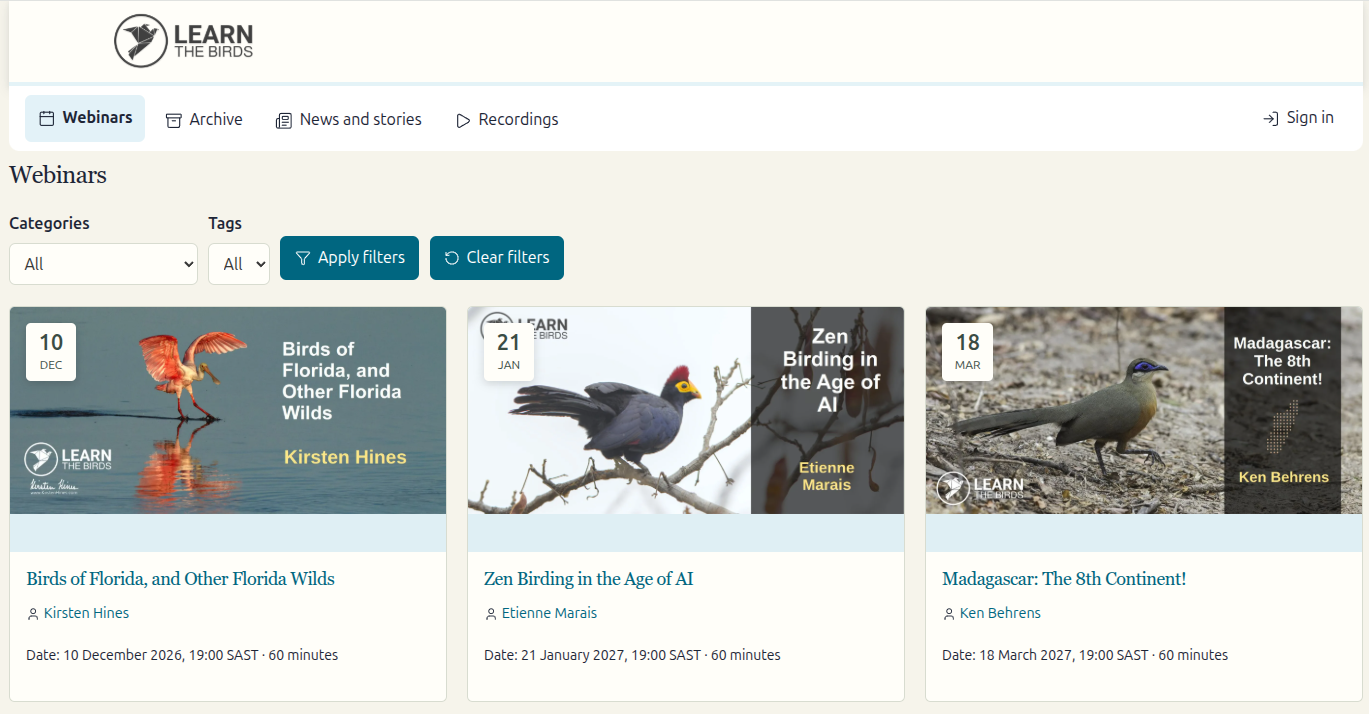
A webinar is more than an online meeting
Running a webinar involves much more than starting an online meeting. There are events to schedule, participants to inform, reminders to send, resources to distribute and follow-up communications to manage. For organisations running regular webinars, workshops or online classes, these tasks can quickly become a significant administrative burden.
Chisimba's Webinar Management module is designed to bring these activities together, making webinars part of a broader learning and communication environment. And because Chisimba is a modular application platform, the same principles can be applied well beyond conventional webinars.
Bringing webinars into the learning environment
A webinar is often treated as an isolated event. Participants receive a meeting link, attend the presentation, and perhaps receive a recording afterwards. But educational or business webinars can be much more valuable when connected to other learning activities.
Chisimba provides a foundation for managing online events alongside publishing, educational content and communication tools. This creates opportunities to link webinars to background reading, learning resources, related articles and subsequent activities. For example, a webinar about bird migration could be supported by an introductory article, followed by additional reading, a short assessment or other learning material.
Instead of existing as a disconnected online meeting, the webinar becomes part of a continuing learning experience.
Learn-the-Birds: Putting webinar management to work
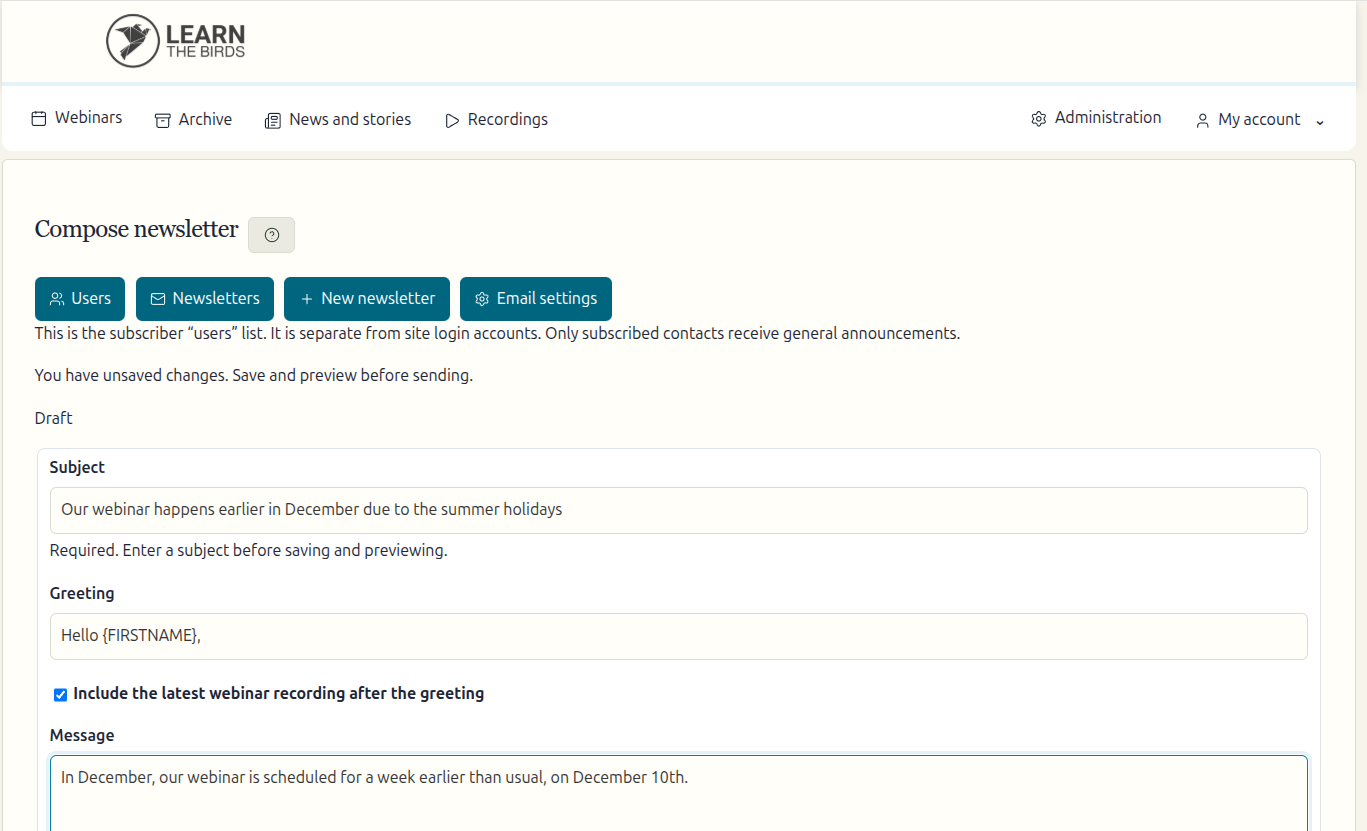
Learn-the-Birds uses Chisimba to support its educational publishing and online events. Webinars provide opportunities to explore bird identification, behaviour, ecology and other aspects of the natural world in greater depth. The Webinar Management module helps bring event information and participant communication into the same environment as the website's educational content. But an especially useful aspect of the platform is its ability to automate routine communication.
Reminders and scheduled messages: People have busy lives. Someone may be interested in a webinar when they first hear about it, only to forget that it is taking place. Automated reminders can help keep participants informed without requiring an organiser to send messages manually each time. This is useful for event announcements, reminders and other communications associated with scheduled activities.
Weekly newsletters: Learn-the-Birds also uses Chisimba's automated communication capabilities to support the regular sending of its weekly newsletter. Instead of relying on someone to remember to initiate every mailing, scheduled processes can manage the recurring work. This allows the people running the site to focus more attention on creating useful content and engaging with their community. It is a practical example of how automation can support a small educational organisation without requiring a large administrative team.
Behind the scenes: The mail queue and email worker
Sending email reliably is not quite as simple as it appears. I know, I have done it for more than six years, and even with some automation assistance it was still a pain. Now it is as smooth as can be.
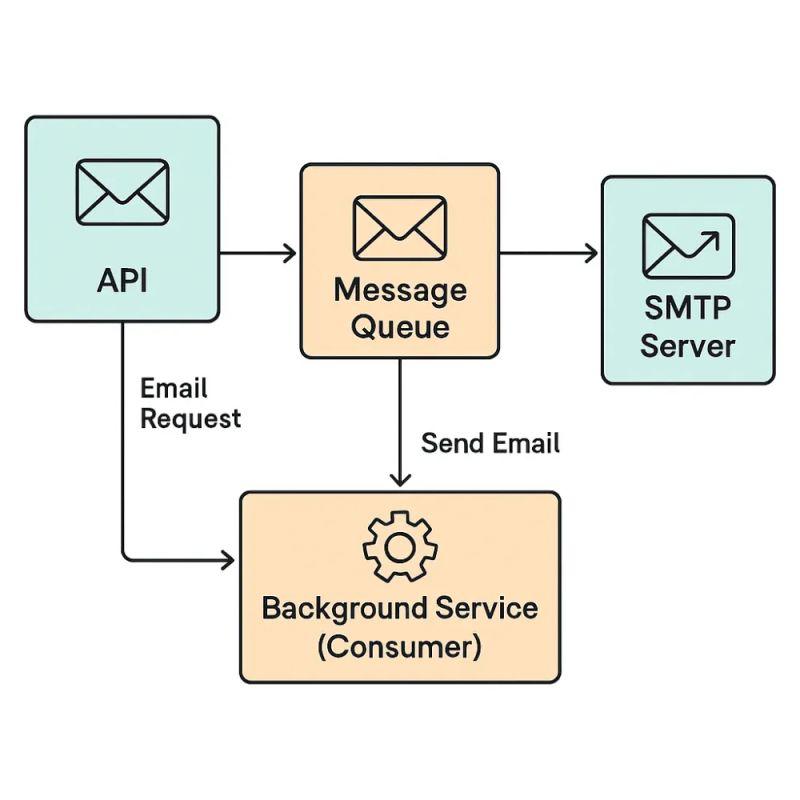
Consider an event reminder that needs to go to many participants. Sending every message directly during a website request would make the system dependent on the speed and availability of the email delivery service. Chisimba addresses this through its communications infrastructure, which separates preparing an email from actually delivering it.
The mail queue holds outgoing messages awaiting processing. The email worker processes queued messages and hands them to the configured email delivery service. This separation has several advantages.
It allows email delivery to happen independently of the web page a user is viewing. It also provides a foundation for recording delivery attempts, investigating problems and managing failed deliveries. A scheduled activity can prepare the required messages, while the communications infrastructure takes care of dispatching them.
The same underlying service can support different parts of Chisimba, rather than each module having to develop its own independent emailing system. That might not be the most visible feature of a webinar platform, but it is an important part of making automation dependable.
The same principle applies to live classes
Now consider a structured course that includes weekly live teaching sessions. An instructor might want students to attend an online discussion every Thursday, participate in a question-and-answer session, or join a live tutorial before completing an assignment. These are essentially scheduled learning events.
The same principles used in webinar management can support live classes within a course:
- Schedule a session and make its details available to the relevant learners.
- Communicate the session information and joining instructions.
- Send reminders before the class.
- Connect the live activity with relevant chapters, readings or assignments.
- Provide follow-up information or additional resources after the session.
The important idea is that a live class should not have to exist outside the learning environment.
It can form part of an organised sequence of learning activities, combining the immediacy of live interaction with the flexibility of online resources. This is especially useful for blended learning, where face-to-face teaching, independent study and online sessions complement one another.
Turning events into lasting educational value
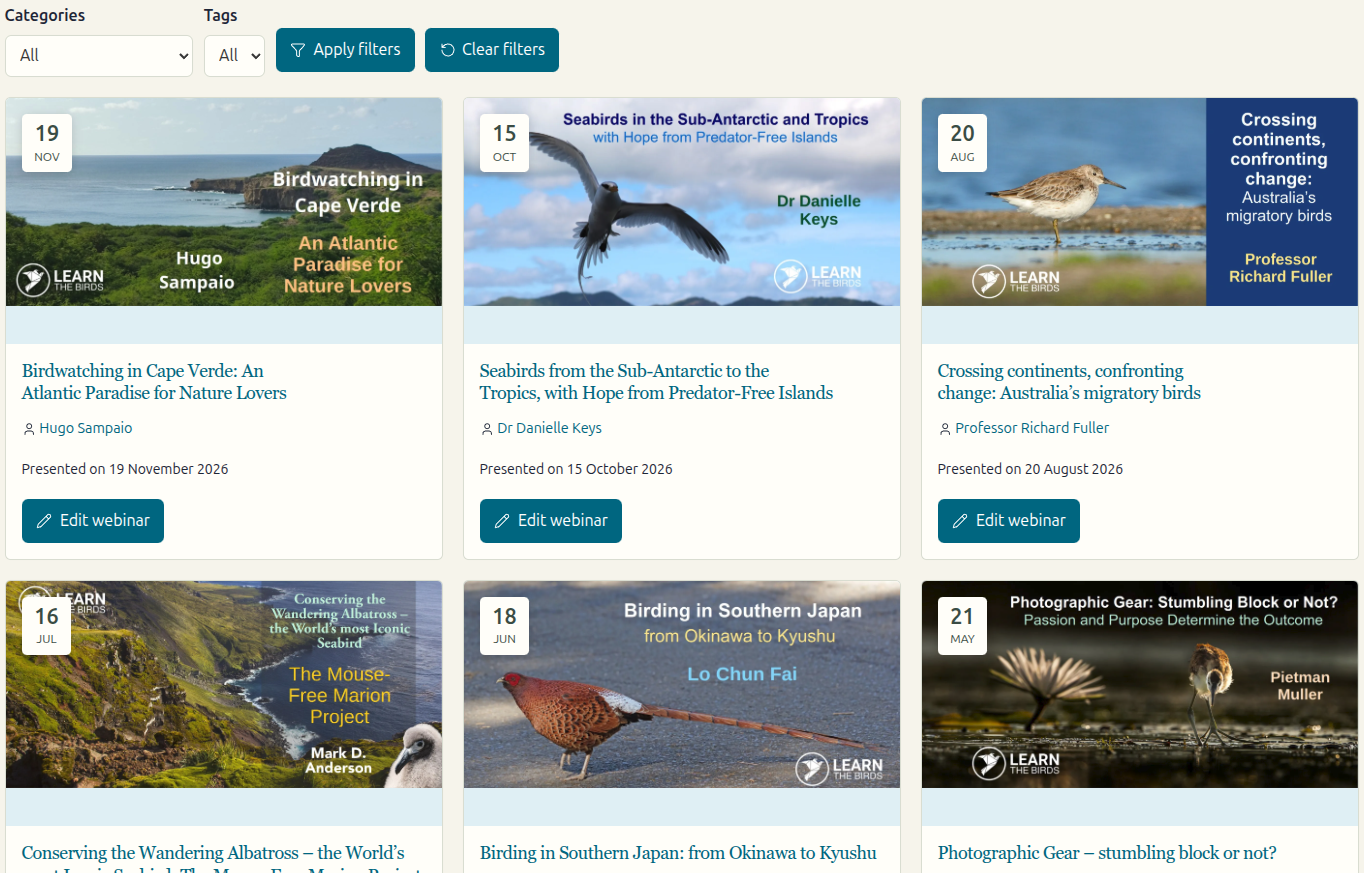
A webinar requires preparation, subject expertise and time. Yet its educational value need not end when the live session finishes. With appropriate permissions, recordings, supporting resources and follow-up activities can be used to extend that value.
A series of webinars might provide the foundation for a short course. A live class could be complemented by additional activities that students complete afterwards. This creates opportunities for organisations to develop reusable learning resources from events they are already delivering.
It also helps connect one-off educational experiences to longer-term engagement. For Learn-the-Birds, this fits naturally with the objective of providing opportunities for people to continue learning about birds and the natural world.
Automation should free people to do more valuable work
One of the guiding principles behind Chisimba is that technology should reduce unnecessary administration. Organisers should be spending their time preparing good events, engaging with participants and developing useful learning material. They should not have to repeat the same administrative tasks every week.
By combining webinar management, scheduled processes and a shared communications service, Chisimba provides a way to reduce that repetitive work. And because these capabilities are modular, they can be reused across different applications and learning environments.
A webinar is more than an online meeting. It is an opportunity to bring people, knowledge, communication and learning together.
Chisimba helps make that possible.
Chisimba — an open-source, modular platform for learning, publishing, communication and knowledge management.
Learn-the-Birds is located at https://learnthebirds.com and it runs monthly webinars and publishes short articles about birds and birding.
Tags: webinar, live class