Chisimba runs Kenga Learn
Supporting learning in the African bush with technology that works alongside real-world experience
Some of the most valuable learning experiences happen far away from a traditional classroom. For students training to become professional nature guides, learning happens while observing animal behaviour, identifying plants, interpreting tracks, understanding ecosystems and discussing what they encounter in the field. These are experiences that cannot be replaced by a computer screen. Nor should they be.
But behind every successful field-based training programme is a considerable amount of administration, learning material, assessment, feedback and record-keeping. This is where Chisimba and Kenga Learn come together.
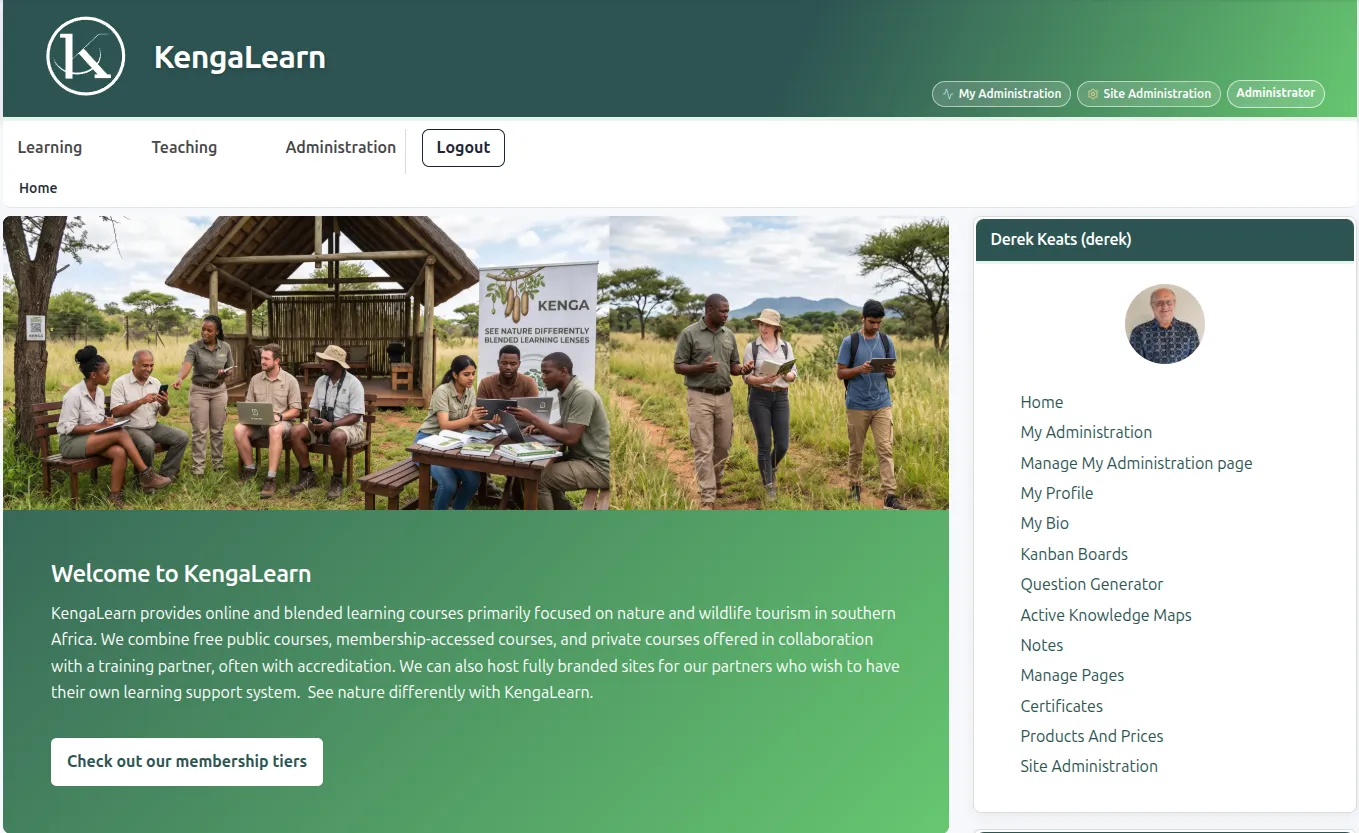
Technology should support the learning, not replace it
KengaLearn is an online learning environment powered by Chisimba, an open-source, modular platform for web applications, learning and knowledge management. Its purpose is straightforward: to support and extend face-to-face, experiential learning while reducing the administrative work that accompanies it.
Consider a student learning about savanna ecology. The student might spend the morning in the field observing how grazing animals, vegetation, soils and seasonal conditions interact. That experience is central to learning. Later, the student can use KengaLearn to revisit important concepts, explore additional resources, complete a short knowledge check or submit an assignment based on their observations. They can even use KengaLearn's mobile app to record their observation logs, and they will automatically sync with KengaLearn when the student marks them complete.
The instructor can review the student's work and provide feedback without having to manage piles of paper or maintain disconnected spreadsheets. The technology reinforces what happens in the field, rather than competing with it.
One learning environment, many possibilities: Chisimba provides Kenga Learn with a growing collection of integrated capabilities.
Assessment that supports learning
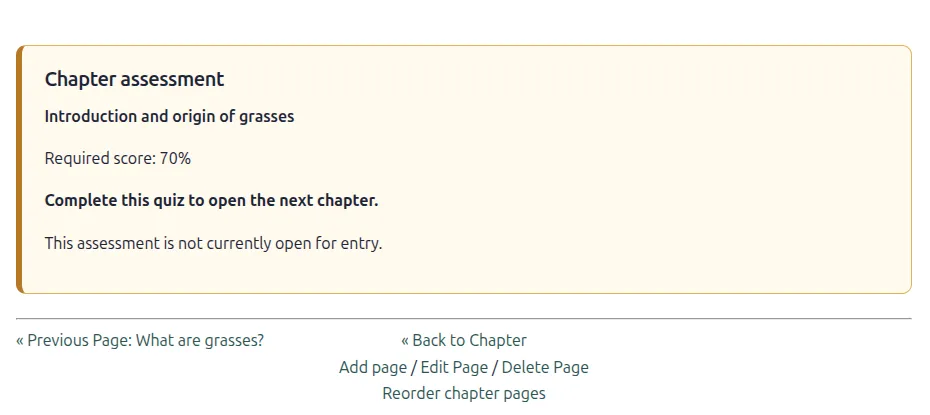
Multiple-choice questions, formative assessments and summative tests can help students check their understanding. Automated marking can provide immediate results for suitable question types, reducing the burden on instructors. Ethical use of AI can also give feedback on assignments under the supervision of the instructor.
Learning content and resources
Instructors can organise learning material into courses, chapters and activities. Students can access text, images, video, documents and other resources to prepare for field activities or reinforce what they have learned. For the instructure, it is a drag-and-drop experience.
Electronic assignment submissions
Students can submit assignments and supporting evidence electronically, including documents and media where appropriate. Instructors can review submissions and provide feedback within the learning environment. Ethical use of supervised AI can also be used to provide feedback on formative assignments.
Progress and performance information
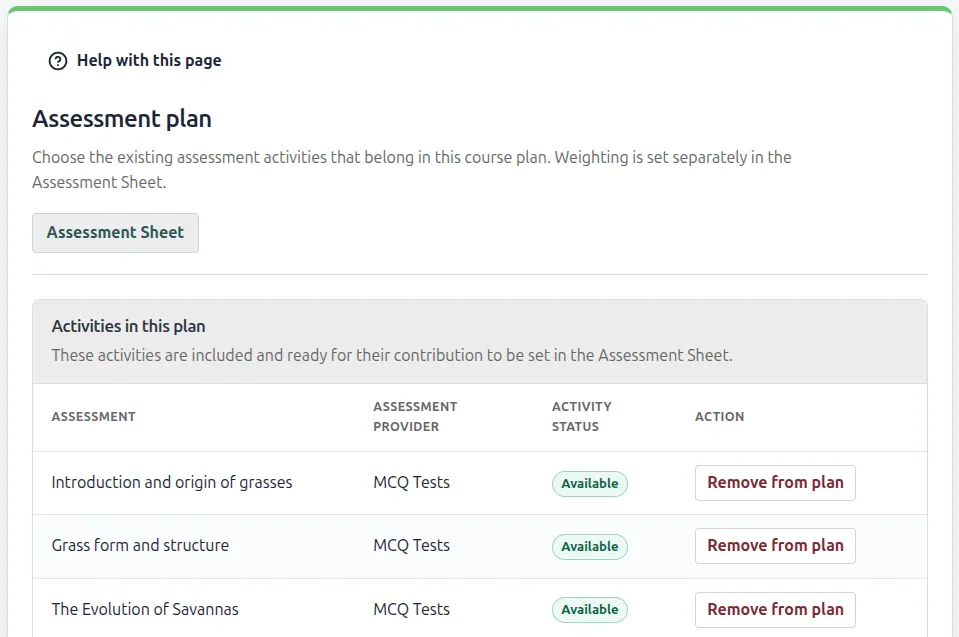
Assessment results and gradebook capabilities help instructors and managers understand student performance without having to assemble information manually from multiple sources.
More time for what matters
For field instructors, time is precious. An hour spent processing paperwork is an hour that cannot be spent helping students understand the natural world. If routine assessment, submissions, grading and record-keeping can be simplified or automated, instructors gain more opportunities to focus on explanation, observation, mentoring and feedback.
Students benefit too. They can engage with learning material at their own pace, revisit difficult concepts and receive feedback on their progress.
The goal is not to turn field-based education into online education. It is to use technology to support field-based education in the best possible way. The goal is to make field-based education better supported, more effective and less administratively demanding.
Built for flexibility
Because Chisimba is modular, KengaLearn can evolve to meet changing educational needs. New content types, assessment approaches and administrative capabilities can be introduced without abandoning the underlying platform. And because Chisimba supports more than conventional course delivery, the same foundation offers opportunities for publishing, knowledge sharing, professional development and other activities.
Bringing learning together
Good education combines experiences, explanations, practice, feedback and reflection. Chisimba provides the digital infrastructure to help bring these elements together. KengaLearn demonstrates how an adaptable learning platform can support an educational environment in which direct experience remains central.

Visit KengaLearn
KengaLearn is powered by Chisimba, an open-source platform for learning, publishing and knowledge management.
Visit KengaLearn at https://kengalearn.com
Tags: field-based learning